
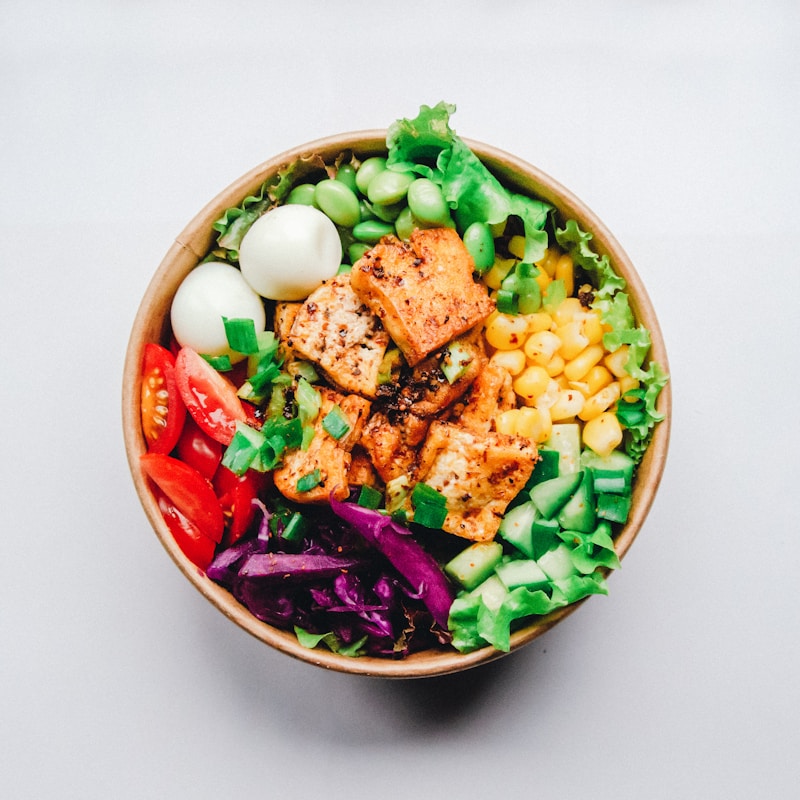
A hundred grams of protein in a day sounds like a number reserved for bodybuilders eating six chicken breasts. In reality, most people who eat with even a little intention get there without noticing, especially on an Indian plate that already leans on dal, curd, and paneer. Here's what 100g actually looks like, meal by meal.
Breakfast: two eggs and a glass of milk. Two whole eggs give you about 12-13g of protein, and a glass of milk adds another 7-8g. That's roughly 20g before 9am, without any "diet food" involved at all.
Mid-morning: a katori of curd or a handful of roasted chana. A standard bowl of curd carries about 6-7g of protein; roasted chana, about 30g, adds close to 7g. Call it 6-7g here.
Lunch: dal, roti, and a protein-forward side. A katori of dal is typically 7-9g of protein on its own. Two rotis add roughly 6g between them. If lunch includes something like our Steamed Chicken (34g protein for 180 calories) or a Steamed Paneer/Tofu with Veggies (22g protein), that single side alone can contribute more protein than the rest of the plate combined. Lunch total: roughly 45-55g depending on what's on the side.
Evening snack: a protein shake, a handful of peanuts, or a boiled egg. Anywhere from 7-24g depending on what you pick — a scoop of whey typically runs 20-24g, peanuts (30g) closer to 7-8g.
Dinner: another round of dal-roti, or a wrap. A Grilled Chicken Wrap, for reference, carries about 34g of protein at 420 calories — enough on its own to close most of the day's remaining gap.
Stack a realistic version of this — two eggs and milk at breakfast, curd mid-morning, dal-roti-with-a-protein-side at lunch, a shake or peanuts in the evening, and a lighter protein-forward dinner — and you're comfortably past 100g without eating anything unusual or expensive. The two levers that actually move the needle are: including a clear protein source at every single meal, not just one "big" meal, and picking dishes where the protein number is actually visible instead of guessed.
That second part is why we list protein by the gram on every item on our menu instead of just calling things "protein-rich" — it's much easier to hit a number you can actually see than one you're estimating from memory.