
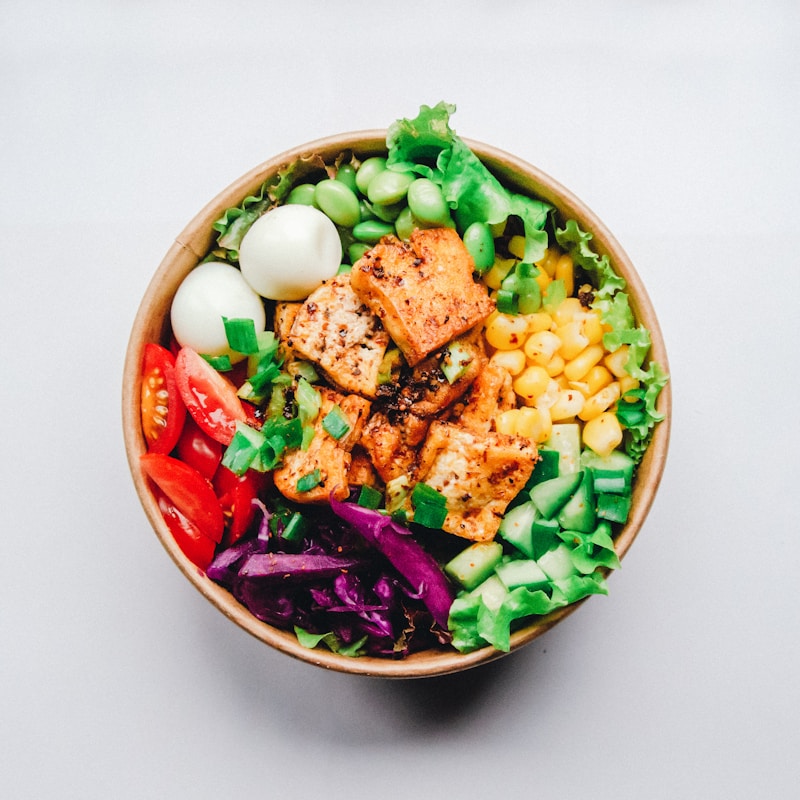
Most people scan a menu for one number — calories — and assume that's the whole story. It isn't. Two dishes can carry the same calorie count and behave completely differently depending on how those calories are split between protein, carbs, and fat. Learning to glance at all three takes about a week of practice and changes how you order permanently.
Start with the basics: protein and carbs both provide about 4 calories per gram, while fat provides about 9 calories per gram — more than double. That's why two 500-calorie meals can look wildly different on a plate: one built around fat, like a creamy curry, might only be a small portion of actual food, while a leaner, higher-protein 500-calorie meal built around grilled protein, rice, and vegetables can be a much larger, more filling portion.
Here's a real example from our own menu. A Grilled Chicken with Brown Rice is 540 calories with 48g of protein. A Cream Chicken Rice is also around 540 calories, but with 44g of protein and more fat driving those calories. Same number on the surface, genuinely different macro profile — and if you're training for muscle or trying to stay full longer, the higher-protein, lower-fat option usually wins even at an identical calorie count.
The second thing worth learning to spot is protein-to-calorie ratio — basically, how much protein you're getting per 100 calories. Our Steamed Chicken is 180 calories for 34g of protein: that's nearly 19g of protein per 100 calories, an exceptional ratio. Compare that to something carb-and-fat-heavy sitting at 5-8g of protein per 100 calories, and you can see why "high protein" and "high calorie" aren't the same claim, even though menus sometimes blur the two.
Fat isn't something to avoid outright — you need some for hormone health and to absorb certain vitamins — but it's worth being aware of because it's the most calorie-dense macro by far, and it's easy to underestimate how much oil or ghee went into a dish just by looking at it.
The habit worth building: before you order, glance at all three numbers, not just calories. Ask what you actually need right now — more protein because you trained today, or something lighter because you didn't — and let the macros, not just the calorie count, make the call.